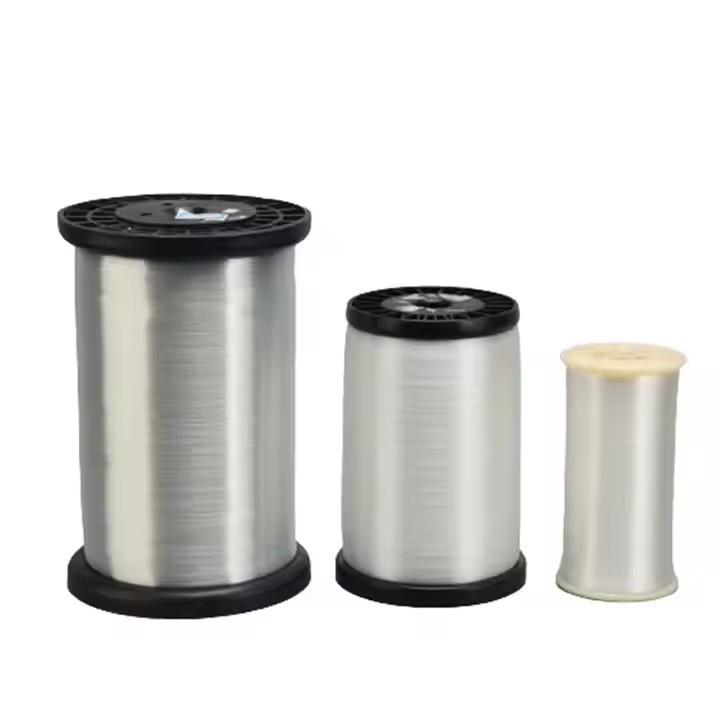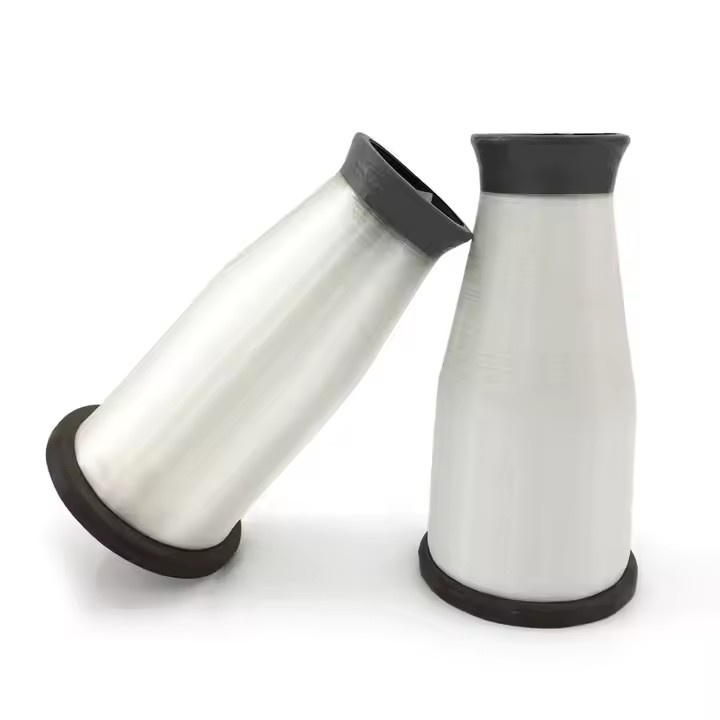
Polyamide Fiber (Nylon)
Polyamide Fiber, commonly known as Nylon, is one of the earliest synthetic fibers to be industrially produced worldwide. Its molecular backbone is linked by amide bonds (-NHCO-), which form the fundamental structure of this extensive polymer family.
The polyamide family encompasses a diverse range of types, with aliphatic polyamides being the most prevalent. These polyamides feature aliphatic chains as their main molecular structure, including Nylon 6 (PA6), Nylon 66 (PA66), and Nylon 56 (PA56), among others.
The numerical designations of aliphatic polyamides indicate the number of carbon atoms in their monomers:
Nylon 6 (PA6)
Nylon 6 was developed in 1938 by Paul Schlack at IG Farben as a response to DuPont’s Nylon 66. It was specifically created to circumvent patent restrictions and rapidly achieve commercialization, emerging as a critical material in the textile and plastics industries in the post-World War II era.
Nylon 6 is a homopolymer with a repeating unit of [NH−(CH₂)₅−CO]ₙ, derived from the single monomer ε-caprolactam (a cyclic amide). Its molecular chains can form hydrogen-bonded sheets with a non-parallel arrangement, endowing the material with excellent elasticity and flexibility.
Nylon 6 is produced via the ring-opening polymerization of caprolactam. In the reaction, caprolactam is heated in the presence of water to undergo ring-opening, forming 6-aminocaproic acid, which then further polymerizes into long molecular chains. Compared to the polycondensation process used for Nylon 66, this manufacturing route is simpler and more cost-effective, leading to its broader range of applications.
Nylon 6 exhibits superior mechanical properties, including high impact resistance, good elasticity, and rapid moisture absorption. It also boasts excellent insulation, chemical resistance, and wear resistance. However, its heat resistance and rigidity are slightly lower than those of Nylon 66. The material has a translucent to milky white appearance, offers better elastic recovery, but has relatively low color fastness.
Nylon 66 (PA66)
Nylon 66 was the first nylon ever synthesized, created by Wallace H. Carothers at DuPont in 1935. It was first used in toothbrushes in 1938 and entered the hosiery market in 1940. During World War II, its production surged dramatically due to high demand for parachutes and military textiles. DuPont maintained a long-standing patent monopoly on Nylon 66.
Nylon 66 has a repeating unit of (−C(O)(CH₂)₄C(O)−NH(CH₂)₆NH−)ₙ, composed of hexamethylenediamine (6 carbon atoms) and adipic acid (6 carbon atoms). This alternating (ABAB) molecular structure enables the formation of parallel chain hydrogen-bonded crystalline regions, enhancing the material’s strength and crystallinity.
Nylon 66 is manufactured through a polycondensation reaction: hexamethylenediamine and adipic acid first react to form nylon salt, which is then purified and crystallized. Subsequent polymerization occurs at approximately 285 °C, with water released as a byproduct. This process requires precise metering and temperature control, making it more complex than the production process for Nylon 6.
Nylon 66 possesses exceptional mechanical strength, rigidity, heat resistance, wear resistance (withstanding up to 60,000 cycles), and creep resistance. It outperforms Nylon 6 in weather resistance, sunlight fastness, and color fastness, but has lower impact resistance and moisture absorption. When dry, it serves as a good electrical insulator, though its performance tends to change with increasing humidity.
Nylon 56 (PA56)
Nylon 56 (PA56) is a novel bio-based polyamide developed in recent years, with industrialization breakthroughs achieved by Chinese companies such as Cathay Biotech. Its key monomer, 1,5-pentanediamine, can be produced via lysine fermentation, with large-scale manufacturing realized in 2013.
Nylon 56 is formed through the polycondensation of 1,5-pentanediamine (5 carbon atoms) and adipic acid (6 carbon atoms), classifying it as an odd-even type dibasic polyamide. Its synthesis adopts the melt polycondensation method: nylon salt is first formed, followed by pressurized reaction at 220–270 °C, and then pressure reduction to increase viscosity. This manufacturing process is environmentally friendly, featuring low energy consumption and minimal pollution, and reduces the usage of non-renewable resources by approximately 50% compared to Nylon 66 production.
Nylon 56 has higher moisture absorption than Nylon 66, along with excellent dyeability and softness, delivering a more comfortable hand feel. It also exhibits outstanding thermal stability, with only 5% weight loss at around 340 °C. Some studies indicate that its acid resistance is superior to that of both Nylon 6 and Nylon 66. While its overall performance is comparable to Nylon 66, Nylon 56 holds distinct advantages in terms of fabric comfort and environmental sustainability.
Core Performance Characteristics
Moisture Absorption and Dyeability:PA6 and PA66 both demonstrate good affinity for acid or reactive dyes, with a standard moisture regain rate of approximately 3%. PA56 has a higher moisture regain rate, with moisture absorption and wicking properties close to those of cotton fiber. It also features faster dye uptake and higher dyeing uniformity, and can be dyed at temperatures below 100 °C, saving about 10–15% energy compared to PA66 dyeing processes.
Chemical Resistance:All three materials are sensitive to strong acids but exhibit excellent alkali resistance. Due to its odd-carbon molecular structure, which imparts greater flexibility to the molecular chains, PA56 experiences only about 5% strength loss after 100 hours of immersion in a pH 4 environment, with acid resistance approximately 30% better than that of PA6 and PA66.
Weather Resistance and Anti-aging Properties:PA66 has a dense molecular structure, offering the best stain resistance and impermeability, while PA6 performs slightly less effectively in these aspects. Thanks to its high chain segment flexibility and good hydrogen bond recovery capability, PA56 exhibits superior anti-aging and ultraviolet (UV) resistance properties.