
Monofilament for forming fabric
Polyester yarn has the core advantages of "stability" and "chemical resistance", and is the "main material" of the forming mesh, suitable as the main structure to undertake support and size maintenance functions; Nylon thread, with outstanding characteristics of "wear resistance" and "toughness", is an "auxiliary material" for forming mesh, often used for local reinforcement to extend service life. In practical applications, the two are often used in combination (such as polyester warp+polyester/nylon alternating weft) to achieve complementary performance, balance stability and wear resistance.
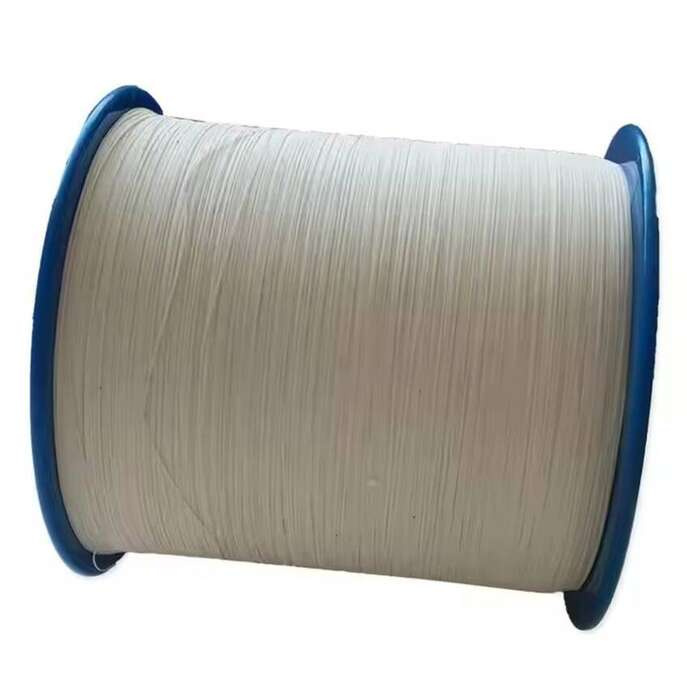
ⅠPolyester monofilament: the first choice for balancing cost-effectiveness and comprehensive performance
Core performance:
High strength, high elasticity, excellent stiffness and dimensional stability;
Strong acid and alkali resistance, organic solvent resistance, and good chemical stability;
Good wear resistance (second only to nylon), moderate heat resistance.
Impact on application scenarios:
The paper industry is the main battlefield: due to its good dimensional stability (able to adapt to tension changes during high-speed operation of paper machines) and chemical stability (resistant to acidic and alkaline environments in pulp), polyester monofilament is the core raw material for paper forming nets, especially suitable for manufacturing forming nets for high-speed wide width paper machines, used in key processes such as paper forming and dewatering.
Ordinary filtration and screening scenarios: In scenarios with moderate requirements for corrosion resistance and wear resistance (such as primary filtration in sewage treatment and grain screening), polyester monofilament formed mesh can replace some high priced materials with its cost-effectiveness advantage.
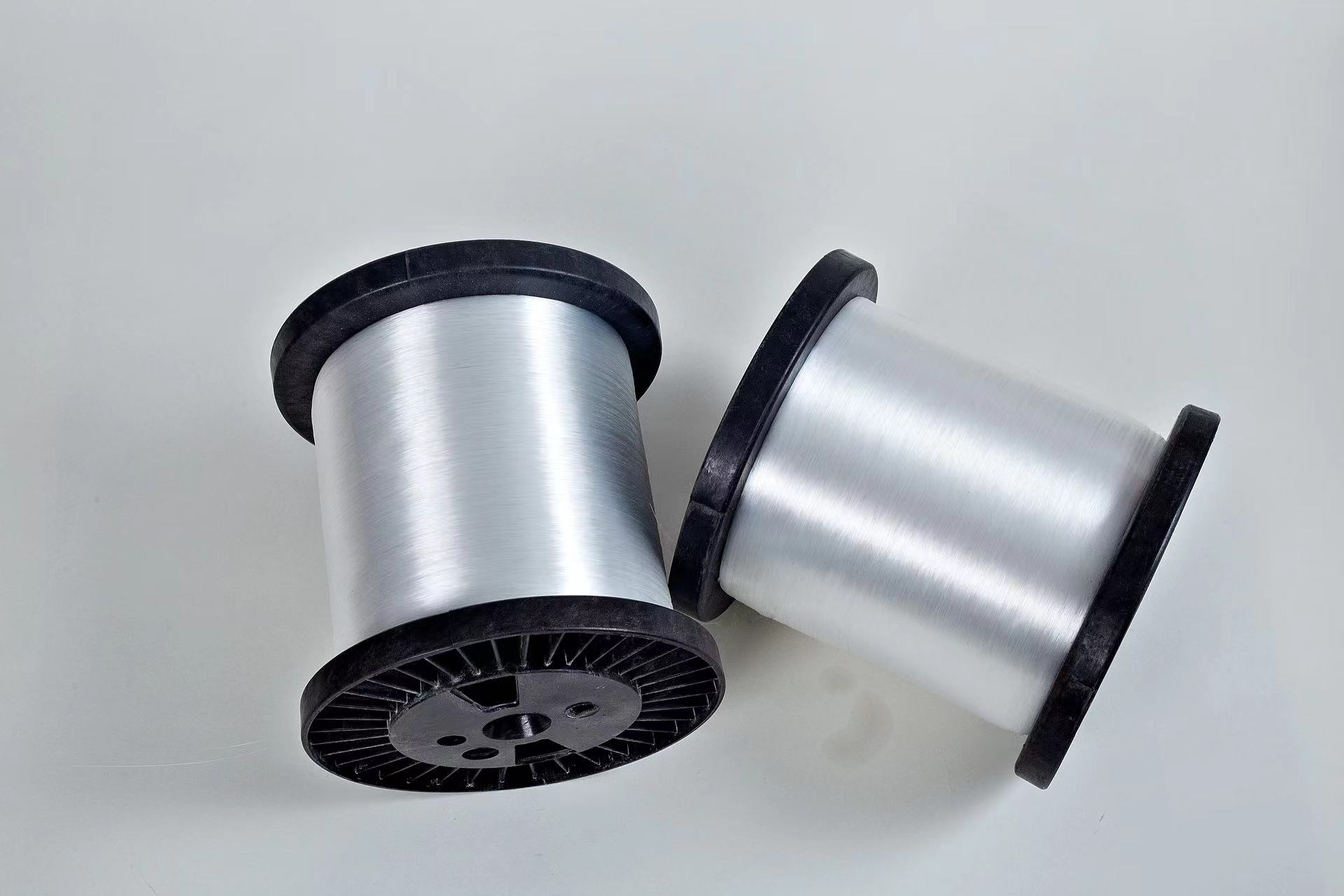
Ⅱ Nylon monofilament (polyamide monofilament): a supplementary material with priority for wear resistance
Core performance:
Excellent wear resistance (better than polyester), but poor stiffness and dimensional stability (susceptible to deformation due to temperature and humidity);
Good alkali resistance, but weak acid resistance.
Impact on application scenarios:
The "reinforcing component" of paper machine felt: Due to its outstanding wear resistance but insufficient stability, nylon monofilament is usually not used alone as the main body of the forming net, but is used as an "auxiliary material" in combination with polyester monofilament. For example, in the bottom layer of the paper making net, alternate with polyester monofilaments (such as 1 nylon+1 polyester) to improve the wear resistance and lifespan of the net, and to adapt to the parts of high-speed paper machines that frequently come into contact with equipment.
Low tension and low-speed scenarios: In scenarios where dimensional stability is not high but frequent friction is required (such as the filter screen of a low-speed screening machine), a small amount of nylon monofilament can be used to enhance wear resistance.

We offer customized silk services for forming mesh, and provide customized solutions based on the personalized needs of different scenarios.
1. In terms of material, polyester, nylon and other monofilament ratios can be adjusted as needed, such as increasing the proportion of nylon in high wear resistant scenes, strengthening the amount of polyester in high-precision scenes, and incorporating other special materials to balance performance and cost.
2.In terms of specifications, it supports customized parameters such as wire diameter (0.1-2.0mm), fracture strength, elastic modulus, etc., to adapt to equipment with different tension requirements. For special environments, UV resistant and anti-aging coatings can be applied to enhance extreme working condition tolerance.
3. In terms of craftsmanship, we provide customized solutions such as single filament mixing and layered composite to meet personalized indicators such as mesh density and air permeability. From sample testing to mass production, we follow up and adjust the entire process to ensure that the product matches the specific production equipment and material characteristics, helping to improve production efficiency and mesh material lifespan.