
How to Choose Between PA6 and PA66 Monofilaments?
Many purchasers and manufacturers of nylon monofilaments encounter the same problem: PA6 and PA66 monofilaments are almost indistinguishable to the naked eye, but there is a significant price gap. Which one should you choose to meet both production and application needs without wasting costs or selecting the wrong material?
First, remember this practical industry mnemonic to quickly grasp the core points:
PA6 Monofilament: Excellent toughness, low cost, smooth spinning, and good impact resistance;
PA66 Monofilament: High hardness, high temperature resistance, strong wear resistance, high rigidity, and stable dimensions.
Combined with the production process of nylon monofilaments and downstream application scenarios (filtration, weaving, industrial consumables, etc.), we will help you accurately distinguish and make a reasonable choice from 5 core dimensions to avoid selection mistakes.
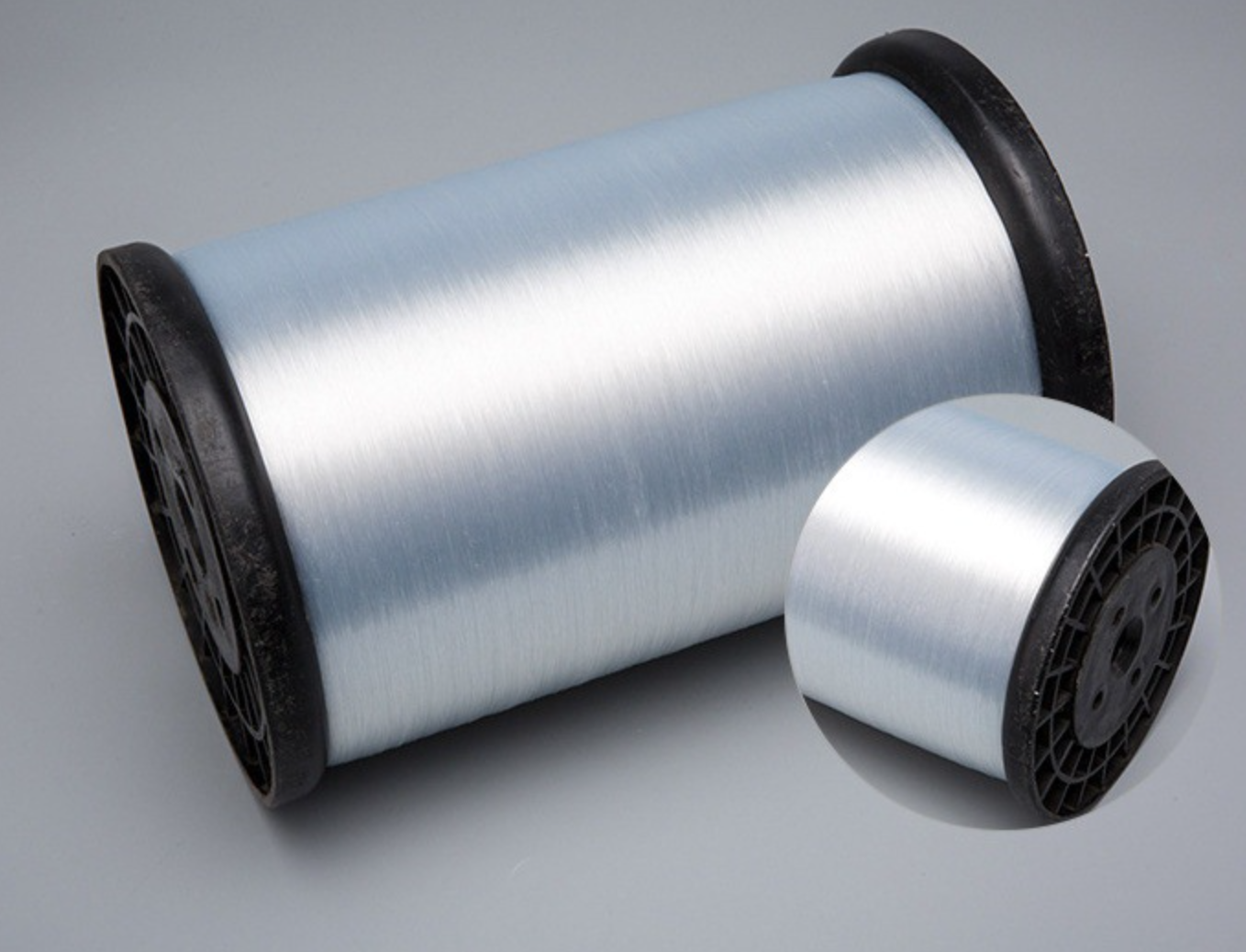
1. High Temperature Resistance: PA66 Monofilament is Superior, Suitable for High-Temperature Working Conditions
Some application scenarios of nylon monofilaments (such as high-temperature filtration, industrial high-temperature transportation) have extremely high requirements for high temperature resistance, and the temperature resistance difference between the two materials directly determines their adaptability:
• PA6 Monofilament: Long-term temperature resistance is 80~100℃. It is easy to soften and deform in high-temperature environments, and even affects the uniformity and mechanical properties of the monofilament;
• PA66 Monofilament: Long-term temperature resistance is 100~120℃, with stronger temperature resistance stability. It can maintain good rigidity and dimensional stability under high-temperature working conditions.
If your monofilament is used for high-temperature filter cloth, boiler filtration, weaving components in high-temperature environments, etc., prioritize PA66 monofilament; for ordinary normal-temperature scenarios (such as conventional webbing, ordinary filter screens), PA6 monofilament can fully meet the requirements.
2. Hardness, Rigidity & Wear Resistance: PA66 Monofilament is More Suitable for High-Load Scenarios
The molecular structure of PA66 is more closely arranged. After being spun into monofilaments, it is inherently "stiffer" than PA6 monofilaments, with more prominent wear resistance and creep resistance. The specific advantages are as follows:
• Higher hardness, the monofilament is not easy to bend or deform, and can maintain good stiffness;
• Excellent wear resistance, not easy to fuzz or break after long-term friction, strong creep resistance, and longer service life.
For nylon monofilament products that need to bear high load and high friction, such as industrial conveyor belt monofilaments, wear-resistant filter screen monofilaments, gear transmission supporting monofilaments, and high-strength woven mesh monofilaments, choosing PA66 monofilament is more reliable, which can effectively reduce later losses and replacement costs.
3. Toughness & Impact Resistance: PA6 Monofilament is Easier to Spin, Suitable for Flexible Needs
PA6 monofilament is relatively softer and has better toughness, which not only has advantages in the application end but also is more convenient in the production end:
• Good toughness, not easy to break, and not easy to become brittle in low-temperature environments, suitable for scenarios that require a certain degree of flexibility;
• Smoother spinning process, good melt fluidity, not easy to have problems such as filament breakage and hairiness during production, which can improve production efficiency and reduce production costs.
If your monofilament is used for flexible webbing, children's product supporting monofilaments, thin-walled woven parts, flexible filter consumables, etc., or if you pursue spinning efficiency and control production losses, PA6 monofilament is a better choice.
4. Water Absorption and Deformation: PA66 Monofilament has More Stable Dimensions, Suitable for Precision Needs
Nylon materials generally have water absorption characteristics, which have a great impact on the uniformity and dimensional stability of monofilaments, directly related to the precision of downstream weaving and filtration:
• PA6 Monofilament: High water absorption rate. After being spun into finished products, it is easy to shrink, warp, and have uneven thickness when stored for a long time or in contact with water vapor, affecting the subsequent weaving precision;
• PA66 Monofilament: Relatively low water absorption rate and better dimensional stability, which can maintain the uniformity of monofilament thickness for a long time, suitable for scenarios such as precision weaving and high-precision filtration.
For precision filter screen monofilaments, high-end webbing monofilaments, and industrial monofilaments with high matching precision (such as precision instrument supporting monofilaments), prioritize PA66 monofilament, which can effectively ensure product consistency.
5. Price and Production Adaptability: PA6 Monofilament Has Cost Advantages
From the perspective of raw material costs, the price of PA66 raw materials is significantly higher than that of PA6, which is reflected in the monofilament products with a significant price gap. Combined with the mass production characteristics of nylon monofilaments:
For mass-produced ordinary monofilament products (such as conventional filter screens, ordinary webbing monofilaments), if they do not involve high temperature, high hardness, high wear resistance or precision requirements, priority should be given to PA6 monofilament, which can greatly reduce raw material costs and total production costs, while ensuring that the basic performance of the products meets the standards.
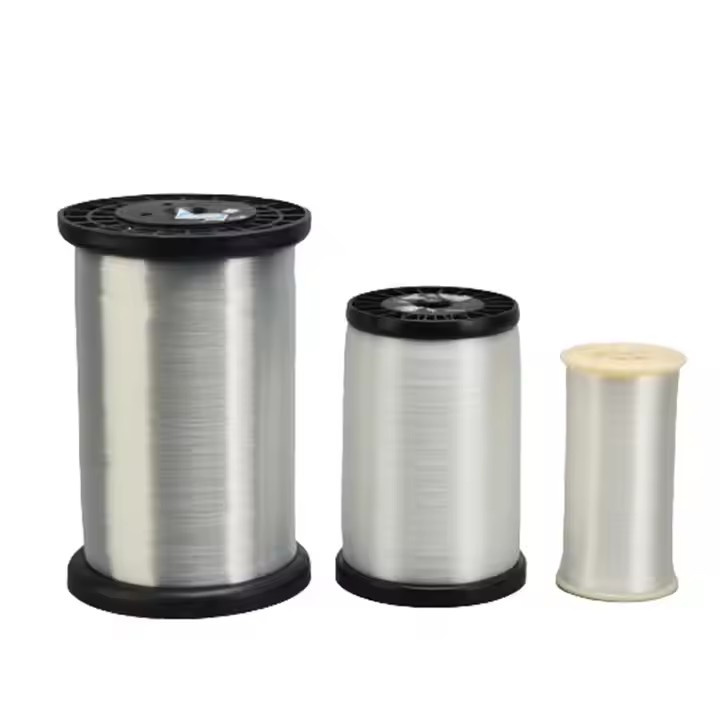
Industry Scenario Summary (Accurately Corresponding to Nylon Monofilament Applications)
Want to control costs, ensure smooth spinning, and adapt to normal temperature/flexible scenarios (conventional webbing, ordinary filter screens) → Choose PA6 monofilament;
Want high temperature resistance, high wear resistance, stable dimensions, and adapt to precision/high-load scenarios (high-temperature filtration, wear-resistant woven mesh) → Choose PA66 monofilament.
For nylon monofilament production, selecting the right raw materials can not only meet the application needs of downstream customers but also optimize the production process, control cost losses, and improve product competitiveness.
Shijiazhuang Yarns focuses on the R&D and production of high-performance nylon monofilaments, deeply cultivating industrial fields such as filtration and weaving. Combining the characteristics of PA6 and PA66 materials, we optimize the spinning process and strictly control product consistency and stability. We always take customer needs as the guide, provide customers with accurate material selection suggestions and customized monofilament products according to downstream application scenarios, and become your reliable long-term partner with solid manufacturing technology and continuous technological innovation.